The Second ArrowStop Adding to the Pain You Already Have
by Serene L.
You can't block the first arrow. You can learn to see the second one coming.
Sunday night. One line from your boss: “Can you pop into my office before tomorrow's meeting? Quick word.” Over the next three hours you rehearse ten versions of being told off, lose an hour to your phone and lie awake overthinking at one in the morning. On Monday your boss asks you to check a budget figure.
The message hurt for about a second. You did the rest to yourself.
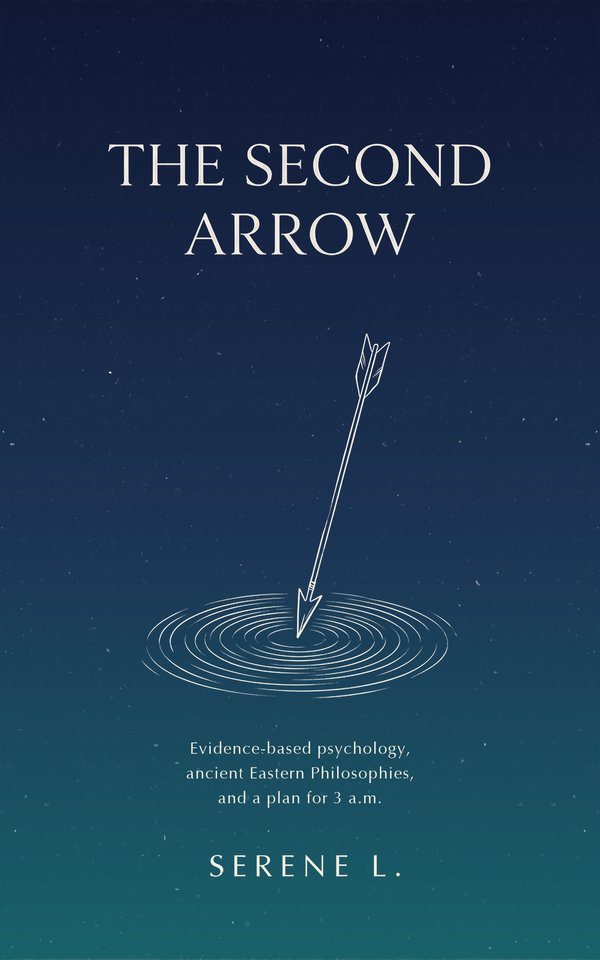
Twenty-five centuries ago a teacher gave that extra pain a name: the second arrow. The first arrow is what life throws at you. The second is everything you add afterwards: the replaying, the scrolling, the 3 a.m. what-ifs. Modern psychology has studied the same habit for decades under other names. This book puts the two side by side.
Inside the book
- The four shapes of the second arrow: the rehearser, the detective, the escaper and the fixer
- How to pull apart a feeling, a thought and an action, and find the three seconds where you still get to choose
- A five-step response to a panic attack, and a staircase back toward places you've been avoiding
- Nine thinking traps, and a small experiment that persuades your brain better than arguing with it
- Work anxiety, doomscrolling and comparison, and a three-step routine for nights when sleep won't come
- A four-week plan, a one-page quick card and crisis lines for eleven countries and regions
This book is for you if
- you wake at 3 a.m. and your mind is holding a meeting
- your heart races before presentations or phone calls
- you know you should stop overthinking and can't
- you scroll until you feel worse
Questions readers ask
What is the second arrow?
It's an image from an early Buddhist text, the Discourse on the Arrow (SN 36.6). The first arrow is the pain itself. The second arrow is the pain we add with our reaction to it: worrying, blaming, avoiding. The book explains the idea and pairs it with matching tools from psychology.
Is this a religious book?
No. The Eastern ideas are retold in everyday language, with sources, and sit beside cognitive behavioral therapy, acceptance and commitment therapy and self-compassion research. You don't need any belief to use the practices.
Does it replace therapy?
No. It's a self-help book. If anxiety lasts for weeks, disrupts your sleep or work, or you have thoughts of harming yourself, please seek professional help. The book lists crisis lines.
Read more
What is the second arrow? The Buddhist idea that explains overthinking